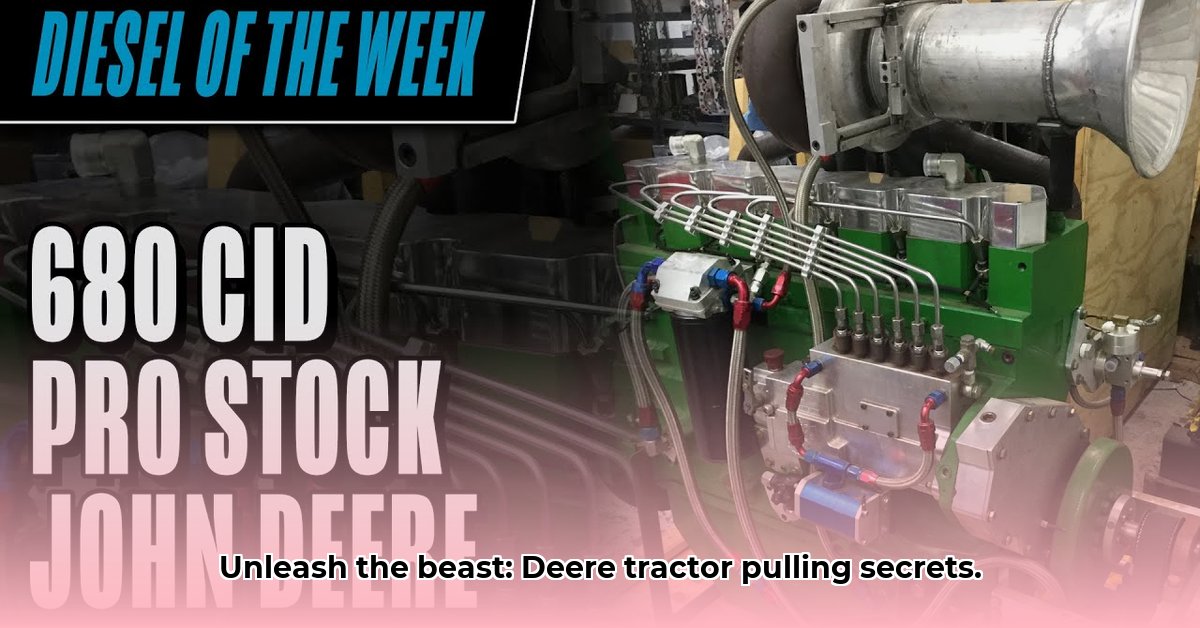
Let's delve into the world of tractor pulling, focusing on the powerhouse that drives these behemoths: the engine. Many competitors choose John Deere engines for their inherent robustness and modification potential. However, creating a champion puller requires more than just assembling parts; it demands a deep understanding of engine modification and strategic planning. This guide will walk you through the process, from initial engine selection to fine-tuning fuel systems and beyond. For more detailed information on modified engines, check out this helpful resource.
Choosing Your Powerhouse: Engine Platform Selection
The journey begins with engine selection. While John Deere engines are popular for their durability and modification potential, other manufacturers, such as International Harvester, offer viable alternatives. The optimal choice depends on several factors. Budget is paramount – some engines are inherently more expensive to acquire and modify. Part availability and access to mechanics experienced with a specific engine are crucial considerations. Your own experience level is also key; starting with a familiar engine can prevent costly mistakes. Careful consideration of these factors is the first crucial step toward building a competitive pulling tractor.
Supercharging Your Power: Turbochargers and Boost
For tractor pulling, a turbocharger is essential for significantly boosting power output. However, "bigger is not always better." Finding the optimal balance between turbocharger size and engine modifications is critical. Overboosting can lead to catastrophic engine failure – a costly and time-consuming setback. Conversely, insufficient boost restricts potential horsepower, disadvantaging you against competitors. Expert engine builders meticulously test and adjust the turbocharger system, maximizing power while maintaining engine reliability under extreme pulling stress. This involves extensive testing, data analysis, and iterative adjustments. What are the most common causes of turbocharger failure in high-performance tractor pulling engines?
Fuel System Precision: The Perfect Power Cocktail
The fuel system is the real heart of the matter. Precise fuel delivery is paramount for maximizing power and engine longevity. Modifying fuel injection pumps and nozzles is common, but requires specialized knowledge. Slight adjustments to fuel delivery dramatically impact power output. Incorrect tuning results in poor performance, unreliable operation, and potential engine damage. Experienced pullers often rely on professional tuners with specialized equipment and deep understanding of these precise processes. How critical is fuel injection timing precision in achieving optimal power output in a modified John Deere engine?
Advanced Modifications: Taking Your John Deere to the Next Level
Let's explore advanced modifications transforming your John Deere from a contender to a champion. These modifications demand expertise and precision.
Camshafts
Custom-ground camshafts are vital for optimizing power and torque. Incorrect camshaft selection negatively impacts performance and may damage the engine. The optimal camshaft depends on the overall engine build, desired power band, and competition events.
Connecting Rods & Crankshafts
These components endure immense stress during a pull. Upgrading to high-strength components is crucial for high-level competition. Cutting corners here risks catastrophic failure, resulting in lost competition time and considerable expense.
Engine Block & Heads
Reinforcing and upgrading the engine block and heads prevents cracks and failures under extreme load. Some teams use specialized, high-strength materials designed to withstand extreme stress and heat. While expensive, these upgrades are vital for engine longevity.
Winning Isn't Just About the Engine
Engine power is only the starting point; success requires a holistic approach. Several other factors significantly impact performance:
Driver Skill: A skilled driver maximizes power extraction, even from imperfectly tuned machines. Experience and skillful driving are crucial for smooth power transfer to the ground.
Weight Management: Precise weight distribution is critical for traction and power transfer. Poor weight distribution leads to wheel spin and reduced pulling power. Careful weight placement maintains optimal traction.
Maintenance: Meticulous maintenance is paramount. Preventative maintenance minimizes downtime and sustains peak engine efficiency. What is the recommended preventative maintenance schedule for a high-performance John Deere tractor pulling engine?
Costs, Future Trends, and Risk Management
Competitive tractor pulling is expensive. Specialized parts, engine building, and ongoing maintenance incur significant costs. However, ongoing research might lower costs and introduce new classes with more affordable engine regulations. Future innovations, including alternative fuels and hybrid powertrains, could reshape the sport.
Minimizing the Risks: Potential Problems and How to Avoid Them
This risk assessment matrix outlines potential failure points and mitigation strategies:
| Component | Risk Level | Potential Impact | Mitigation Strategy |
|---|---|---|---|
| Turbocharger | High | Catastrophic engine failure | Redundancy (backup system), rigorous testing, preventative maintenance, careful tuning |
| Fuel Injection System | High | Engine damage, poor performance | High-quality components, precise tuning, regular servicing by qualified technician |
| Engine Block/Head | Medium | Cracks, leaks, failure | High-strength materials, proper cooling, and lubrication |
| Connecting Rods/Crankshaft | Medium | Rod failure, crankshaft breakage | Regular inspection, proper lubrication, high-quality parts, careful break-in process |
| Water Injection System | Low | Reduced performance, overheating | Regular maintenance and fluid monitoring, proper pump operation |
This guide provides a comprehensive overview of building a successful John Deere tractor pulling engine. Remember, tractor pulling is constantly evolving. Continuous learning and adaptation are crucial for success. This is a journey of ongoing refinement and optimization; the information here serves as a foundation, not a definitive guide. The optimal strategies depend heavily on individual circumstances and ongoing developments within the sport.